Ride and walk
Praga by retro bus
Ząbkowska, Brzeska, Stalowa
- Length2.5 hours
- MeetsPalace of Culture
- GuideEnglish
Locate your stop
Warsaw: 2.5-Hour Dark Side - Praga District by a Retro Bus
★ 4.6 · 288 opinions
Open 36 stops
First pick a route, then tap any pin or stop for details and Google Maps.
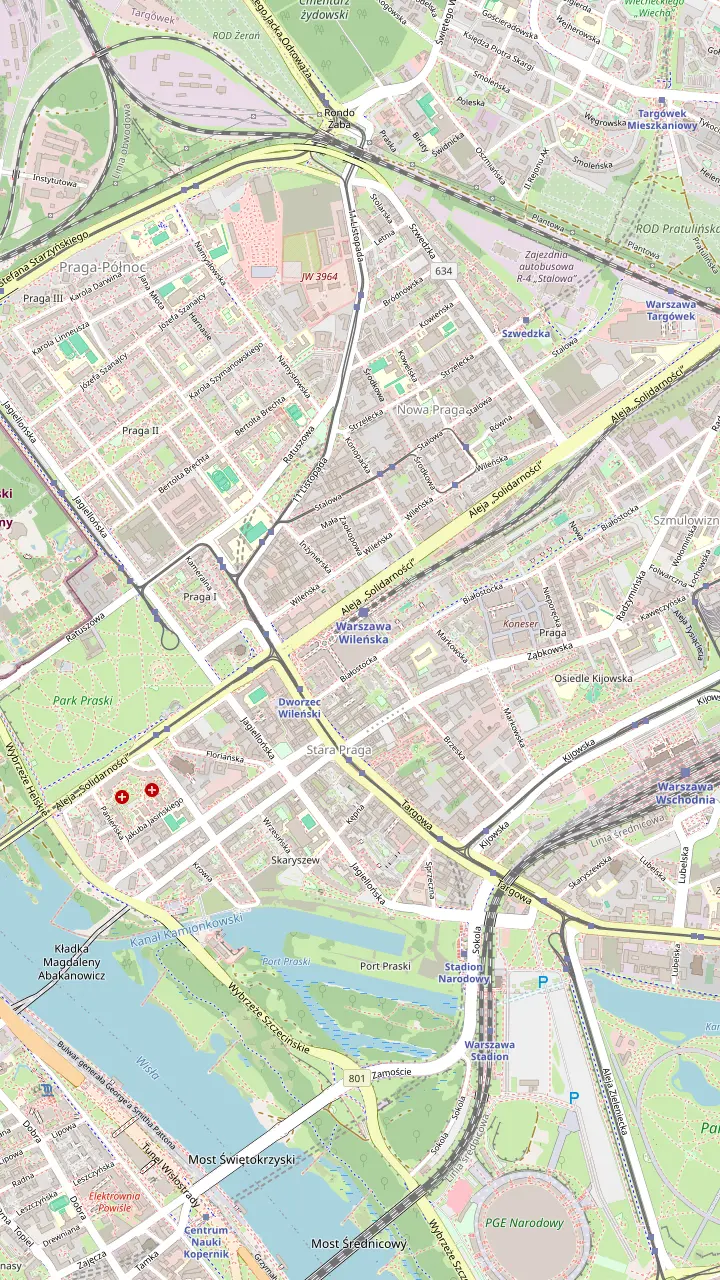
Start of Old Praga: metro line II to Dworzec Wileński, or a tram from Ratusz Arsenał.
Google MapsBuilt between 1867 and 1869 in the style of Kyiv's churches.
Google MapsNeo-Gothic cathedral from the turn of the 20th century, next to the Rusałka milk bar.
Google MapsA monument to the backyard street bands of Praga, on Kłopotowskiego Street.
Google MapsIn the oldest surviving house in Praga, built 1818-1819, with a painted Jewish prayer room.
Google MapsThe open-air market opened in 1882; a black market in the war.
Google MapsCourtyard shrines from the occupation; around 100 survive in Praga.
Google MapsIn the former Koneser vodka factory, opened in 1897; a tasting ends the visit.
Google MapsThe street of films: The Pianist was shot here.
Google Maps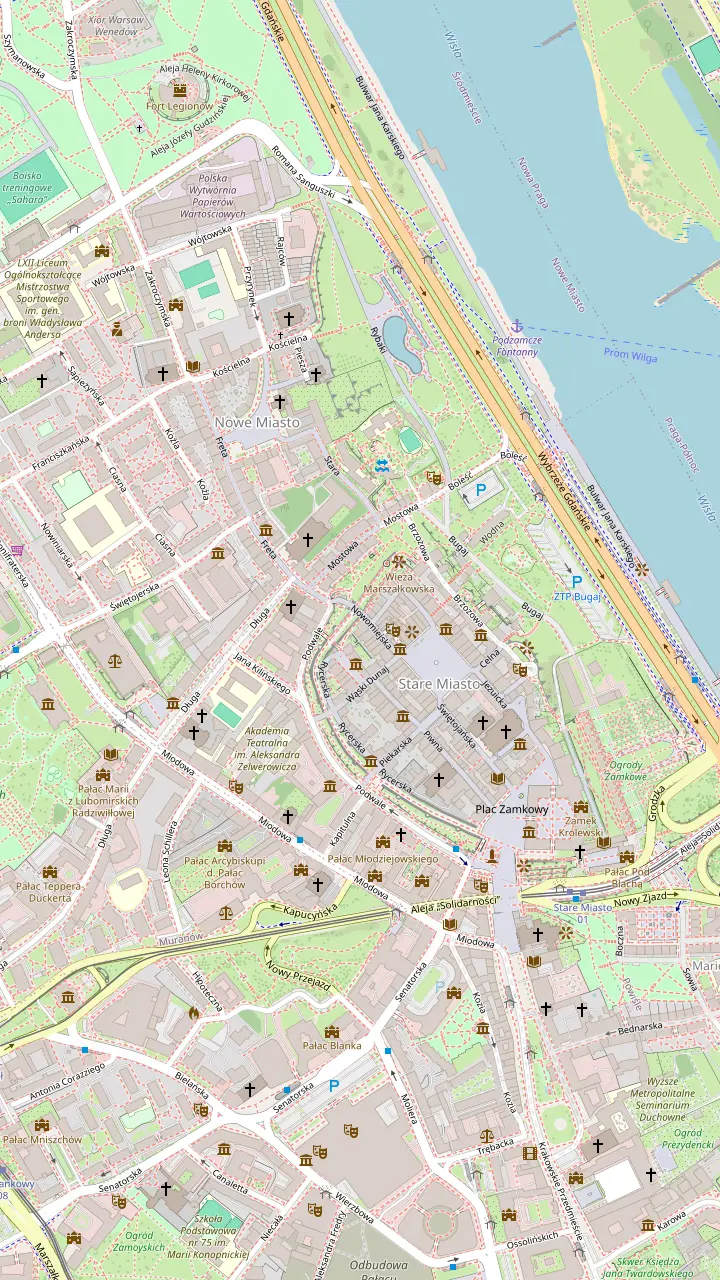
Raised for King Sigismund III Vasa in 1644, the oldest secular monument in Warsaw and the city's favourite meeting point.
Google MapsRebuilt only in 1971-1984; open Tuesday to Sunday 10 AM-5 PM, last entry 4 PM, with a free special route on Wednesdays.
Google MapsThe 14th-century cathedral was 90% destroyed in 1944 and rebuilt; its crypt holds a king, dukes and a Nobel winner.
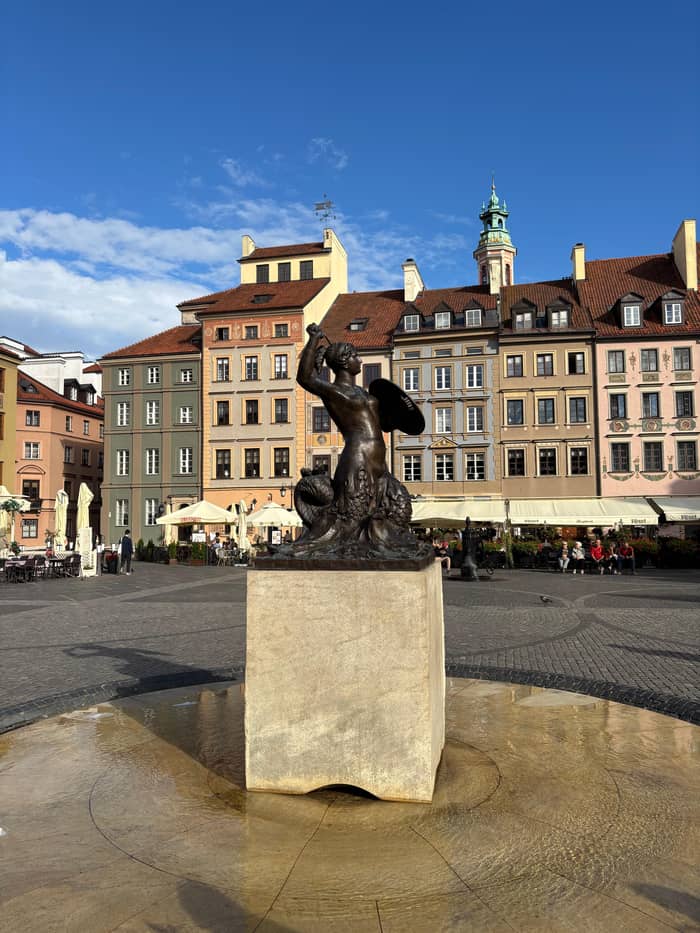
Google MapsLaid out at the turn of the 13th and 14th centuries, with the Mermaid statue in the middle.
Google MapsThings of Warsaw: 7352 objects in 21 themed rooms, a 5th-floor viewpoint, free on Thursdays.
Google MapsThe story of the destruction and rebuilding of the Old Town; PLN 10, free on Thursdays.
Google MapsThe observation point the tourist office recommends for a photo of the Vistula.
Google MapsOne of the few surviving parts of the walls; exhibition May 20 to August 29, Wednesday and Saturday 1PM-5PM.
Google MapsA boy in a big helmet, for the children who fought in 1944.
Google MapsThe heart of the New Town, built at the turn of the 14th and 15th centuries.
Google MapsThe house museum at 16 Freta Street, free on Tuesdays.
Google MapsInsurgents under a bridge support and entering the sewers; a sewer entry hole is on the square.
Google Maps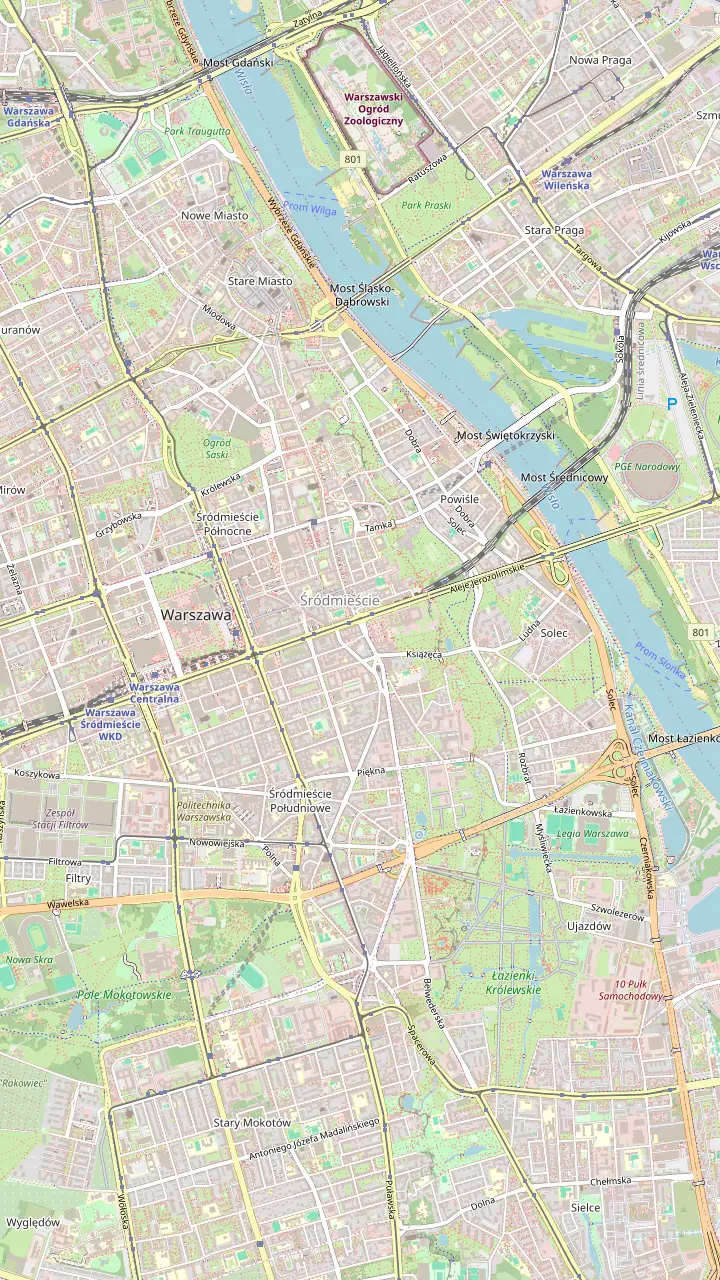
Viewing terrace on the 30th floor at 114 m, open 10:00 AM to 8:00 PM; tourist information inside.
Google MapsThe plastic palm tree by Joanna Rajkowska has stood here since 2002.
Google MapsMeeting point of this site's walking tour, on Krakowskie Przedmieście.
Google MapsChopin's heart rests in a pillar here; note the Sursum Corda figure outside.
Google MapsUniversity campus palace that housed the Warsaw Lyceum, which Chopin attended, in 1817-1831.
Google MapsThe largest of Warsaw's palaces, guarded by 4 stone lions; Chopin played his first concert here aged 8.
Google MapsThe honour guard stands in the arcades of the destroyed Saxon Palace, by the Saxon Garden.
Google MapsTower view of the Old Town, the skyscrapers and the Vistula valley; closed for renovation since October 7, 2026.
Google MapsThe royal summer palace in Łazienki park; free Chopin concerts by the monument on summer Sundays.
Google Maps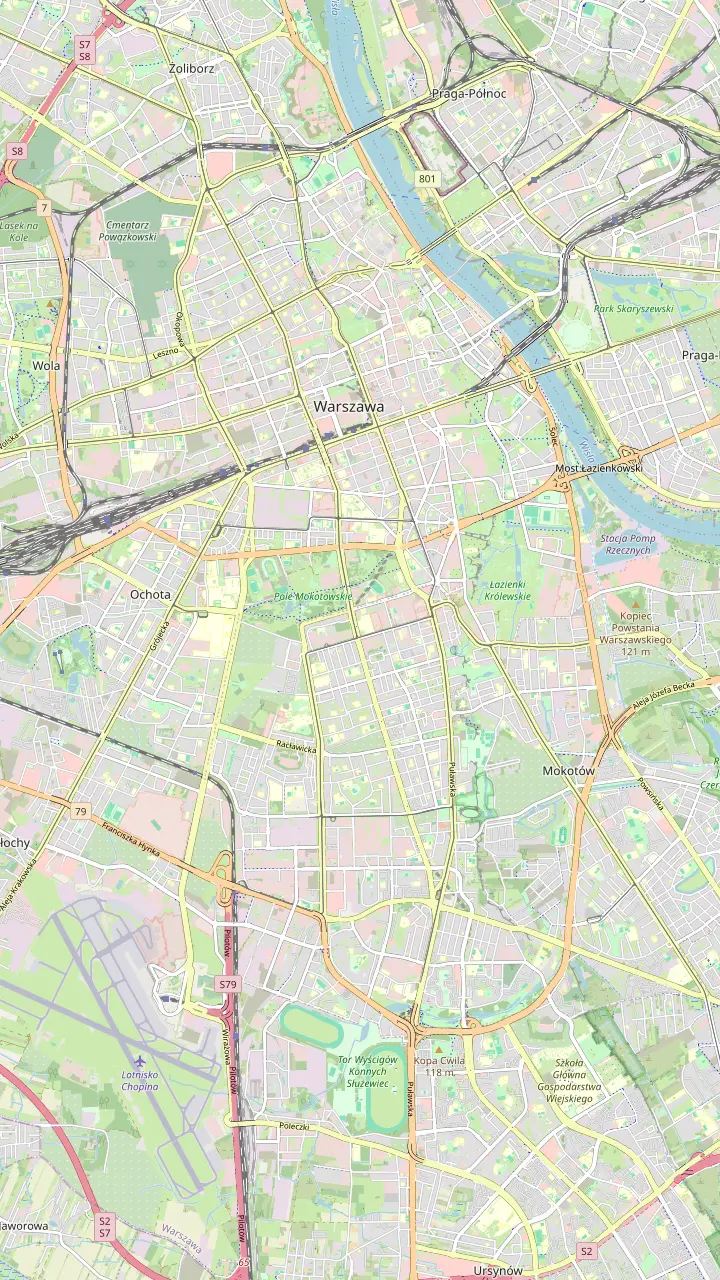
Aleje Jerozolimskie 54, the main long-distance station in the heart of the city.
Google MapsCity-centre rail station; bus 175 from Chopin Airport stops here.
Google MapsLong-distance station next to the international bus station.
Google MapsThe long-distance station on the Praga side of the river.
Google MapsAbout 10 km from the centre; trains S2, S3 and RL and bus 175 run into town.
Google MapsMetro line I station for the tram to Castle Square and Praga.
Google MapsMaps © OpenStreetMap contributors
A Praga Warsaw walking tour shows a city the bombs mostly missed: courtyard shrines, a 19th-century bazaar, a vodka factory turned museum and the street where The Pianist was filmed.
Editorial team, warsawwalkingtour.click · Updated November 9, 2026 · Allow 9 min
Essentials
Cross the Vistula and the city changes. A Praga Warsaw walking tour takes you into the old town on the right bank, which stayed separate from Warsaw until 1791.5 Its name comes from a roasted, or burnt, forest.6 From the beginning it was a trading district that supplied the left bank, a character shaped by its large Jewish merchant community.7 The streets still feel more like a working town than a capital: low tenements, shop signs, courtyards and tram lines.
Above all, Praga is old in a way the Old Town is not. Unlike the left bank, the district almost escaped destruction in the Second World War and so kept its pre-war buildings and character.1 The tourist office is frank about the darker chapters. In 1940, after the Jews were forced into the ghetto, their empty houses were taken over by poor families.8 After the war the district was neglected, crime was high, and for years it had a worse reputation than the other bank.9
That reputation, the tourist office says, now belongs to the past, and Praga draws visitors with its time-worn townhouses, original eateries and slower pace.10 The British newspaper The Independent even ranked it among the 10 coolest and most promising neighborhoods in Europe.11 Listen to older residents: the local Warsaw dialect survives best here.12 This guide walks Old Praga first, then the factory streets of Szmulowizna and the film sets of Nowa Praga, all marked on the Praga map panel.
Addresses
| Stop | Address | Why go |
|---|---|---|
| Rusałka milk bar | 14 Floriańska Street | Unchanged milk bar |
| Praga Museum of Warsaw | Targowa 50/52 | Painted prayer room |
| Courtyard with gallery | 13 Ząbkowska Street | Wooden gallery |
| Pyzy Flaki Gorące | 29/30 Brzeska Street | Dumplings and tripe |
| Burke annexe | 26 Kawęczyńska Street | A wooden house |
| Fight Club mural | 17 Środkowa Street | Conor Harrington mural |
Addresses as the Warsaw Tourism Office's North Praga walk gives them.26,13,27,28,29,30
The quickest way in is metro line II to Dworzec Wileński station, which comes up on Wileński Square, or a tram from the Ratusz Arsenał metro station on line I, near the Old Town.2 If you are arriving by train, Warszawa Wschodnia is the long-distance station on the Praga side.18 On foot, the modern pedestrian and cycling bridge links both banks and gives you views over the whole city as you cross.19 In summer a free ferry also shuttles between the riverbanks.20
Walk the riverbank on the way. The tourist office's walk along the Praga bank, from the Gdański Bridge to the Łazienkowski Bridge, is a wild stretch protected under the Natura 2000 program, where you can meet beavers, cormorants and kingfishers.21 It passes 6 Warsaw bridges and several beaches, with views of the Old Town and the skyscrapers at sunset.22 Sitting on the sand and looking back at the rebuilt Old Town across the water is a simple pleasure no visitor should skip.23
Further south on the same bank rises the PGE Narodowy stadium, built for the European Football Championship in 2012 on the site of an older stadium.24 At night it glows white and red, the colors of the Polish flag, and you can see it from the boulevards opposite.25 For the walk in this guide, though, head inland from the river into North Praga, where the old streets begin. Allow most of a day if you want to see the courtyards, a museum and a meal, and wear shoes for cobbles.
A guided route
Time at each stop as the 2.5-hour Praga walking tour on GetYourGuide lists it; it ends at St Florian's cathedral.
Start on Wileński Square, where an Orthodox cathedral, the Metropolitan Cathedral of St Mary Magdalene, towers over the junction. It was built between 1867 and 1869 and takes its design from the churches of Kyiv.14 Time your visit for midday, when the historic Władysław IV High School plays the old Praga song Chodź na Pragie, Come to Praga, as it does daily.35 Along Kłopotowskiego Street is the Monument to the Praga Backyard Band, the street musicians who played such songs.36
A short walk away, at 14 Floriańska Street, the Rusałka milk bar has kept its service and decor unchanged for years, wood paneling and checkered oilcloths included.26 Right next door rises St Florian's, the neo-Gothic cathedral dedicated to St Michael the Archangel and St Florian the Martyr, which dates from the turn of the 20th century.37 Its tall spires are easy to spot from the side streets, which makes the church a useful compass point when you lose your bearings among the tenements.
Back near the band monument, the Kino Praha cinema has 12 bas-reliefs on its facade, each showing a well-known Polish actor linked to Warsaw.38 Toward the river, at Kłopotowskiego 1/3, stands a classicist building by Antonio Corazzi, put up in 1824 as the toll house for the bridge to the Old Town; look for Neptune carved on the facade.39 These small finds are the point of Praga: the district rewards slow walking more than ticking off sights.
Plan your visit
Pick the version of Praga that fits your day.
If I like old streets and courtyards
Walk Ząbkowska and Brzeska
Around 100 courtyard shrines survive in Praga.3
If I want history indoors
Start at the Praga Museum of Warsaw
It keeps a painted Jewish prayer room and a model of 18th-century Praga.31,32
If I want food and drink
Lunch on Ząbkowska, finish at Koneser
The vodka museum ends with a tasting for adults at the Vodka Academy.33
If I love film
Walk Stalowa Street
Roman Polański shot The Pianist on this street.34
If I have little time
Join the retro bus tour
It covers Ząbkowska, Brzeska and Stalowa in 2.5 hours.
Guided Praga
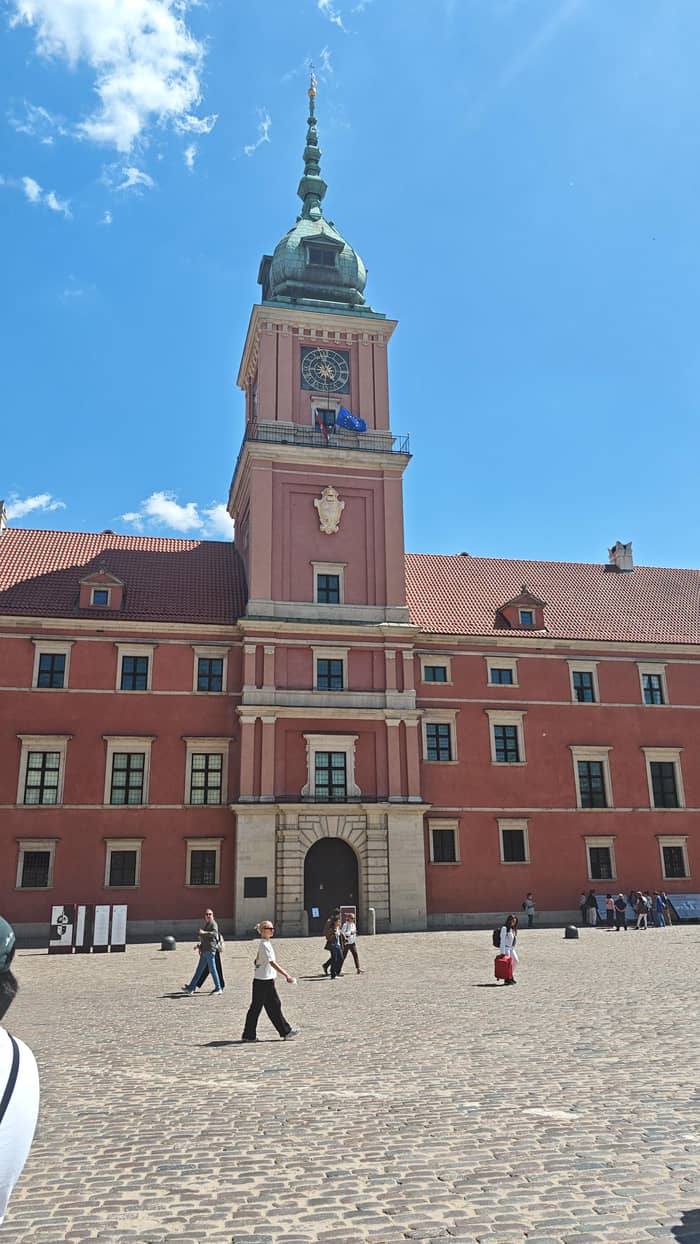
Ride and walk
Ząbkowska, Brzeska, Stalowa
On foot
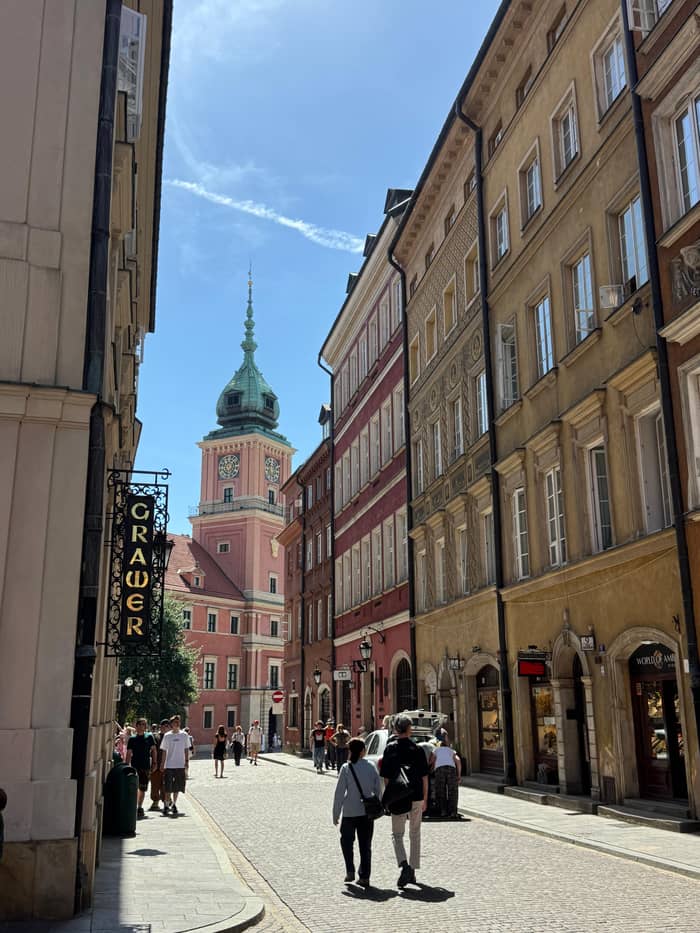
Murals, Stalowa, Koneser
Private group
Cathedral to the vodka factory
Before the war Praga had a large Jewish community, and its traces are quiet and easy to pass by. At the corner of Kłopotowskiego and Jagiellońska Streets stood the round Praga Synagogue until the 1960s; a small hill on the kindergarten grounds is all that remains.91 The former mikvah, the Jewish ritual bath, survives as a building at 31 Kłopotowskiego Street.92 Pause at both places. Nothing is signposted loudly, and that silence is part of what they say about the district's history.
On Targowa Street, at number 50/52, a small single-story house near the gate of the Różycki Bazaar is the oldest surviving residential building in Praga, built between 1818 and 1819.13 It and its neighbors now house the Praga Museum of Warsaw, which keeps an original Jewish prayer room with its painted walls.79 Its painted scenes include zodiac signs, the tomb of Rachel and worshippers at the Wailing Wall.31 It is a rare chance to see the inside of a Jewish house of prayer from old Praga.
The museum also shows a large model of 18th-century Praga, archival photographs and souvenirs that residents donated, along with a room of toys and trinkets from the old bazaar.32 Entry is free on Thursdays.4 It is the best place to start if you want context before walking the courtyards. From its door, the bazaar gate is a few steps away, so the museum and the market make a natural pair.
Price a Praga tour
Choose a Praga tour and say how many are coming.
Side-by-side: 2 options
Choose a Praga tour and say how many are coming.
≈
View≈
ViewConverted at the ECB reference rate, from-prices as listed by GetYourGuide. The precise amount is shown when you book.
Praga's story
1791
Until then Praga was a separate town.5
1818-1819
Built on Targowa Street, now the museum.13
1867-1869
Raised on Wileński Square in the style of Kyiv.14
1882
The Różycki market starts trading.15
1897
Koneser opens on Ząbkowska Street.16
1972
Praga's longest housing block goes up.17
The Różycki open-air market opened in 1882, and a few stalls still trade.15 During the war it was a black market, and after it, in the shortages of the 1970s and 1980s, it flourished again.80 Today it is more legend than shopping trip, but the old gate and the stalls are worth a look. Turn from Targowa into Ząbkowska Street, the district's main drag for food and drink, where old townhouses hold cult pubs such as W Oparach Absurdu and Łysy Pingwin.93
For lunch, try a milk-bar classic at Bar Ząbkowski, where Ząbkowska meets Targowa.93 The dumplings and tripe once sold straight from the pot at the bazaar now come served from a jar at Pyzy Flaki Gorące, 29/30 Brzeska Street.28 On Brzeska, at number 21, look up for the painted sign of the tailor Moszek Szatz, who served Praga residents in the 1930s.89 Old painted signs like this one are easy to miss, so walk with your eyes above the shop windows.
Then step through the gateways. In almost every courtyard on Ząbkowska and Brzeska you will find a small shrine, built during the German occupation as a place of prayer and comfort; around 100 of them survive in Praga.3 They are places of prayer, so be discreet with your camera. At 13 Ząbkowska Street, a courtyard from around 1870 keeps a wooden gallery that leads to the first-floor flats.27 Courtyards are private spaces: look from the gate, keep your voice down and leave if anyone asks.
Video
KeiKeiKei on YouTube · Your tap on play is what loads the video.
Unlike the left bank of Warsaw, the district almost escaped destruction during the Second World War and has therefore retained its pre-war buildings and character
Before you cross
Continue east along Ząbkowska into Szmulowizna, named after its landowner, the wealthy Jewish merchant Szmul Zbytkower, a protégé of King Stanisław August Poniatowski.94 Here stands the Koneser vodka factory, which opened in 1897.16 Vodka was made on the site for 100 years, and the State Mint also worked there.95 Today the brick halls are a lively quarter of restaurants, offices and cultural spaces, and a showcase of how the old factories found new uses.
Inside the old distillery, the Polish Vodka Museum tells the 500-year story of the drink in 5 interactive galleries.96,97 The visit ends with a tasting at the Vodka Academy, where a specialist helps you compare vodkas made from rye, wheat and potatoes.33 The tasting is for adults, so plan it at the end of the walk rather than the start. If you are not drinking, the galleries alone are worth the visit for the bottles and the distilling equipment on display.
Beyond Koneser, Ząbkowska becomes Kawęczyńska Street. At number 26 stands the Burke annexe, one of the last 2 wooden houses in Praga.29 Further on, the Basilica of the Sacred Heart dominates the skyline. On Kijowska Street, the long housing block nicknamed the Dachshund was built in 1972 to screen the poorest corner of Szmulki from travelers leaving the East Station.17 The contrast between the factory chic and the old tenements is the most honest picture of Praga today.
North of Wileński Square lies Nowa Praga, which dates from 1860, when the entrepreneur Ksawery Konopacki bought the wasteland next to Old Praga.98 On Inżynierska Street a pre-war tram depot stands where the city's first horse-drawn tram set off in 1866.99 Stalowa Street, nearby, looks almost as it did before the war and has served as a film set many times; Roman Polański shot The Pianist here.34 Walk it slowly and you will recognize scenes.
On Środkowa Street, number 9, from 1879, is the other wooden house still standing in Praga.100,101 Across the road, on the building at number 17, is one of the capital's most striking murals, Fight Club by Conor Harrington.30 For a drink afterward, the courtyard at 22 on 11 Listopada Street holds bars such as Chmury, Hydrozagadka and Skład Butelek.102 The 17th-century Church of Our Lady of Loretto keeps the oldest Gothic sculpture in Warsaw, a Virgin Mary.103
A note on the Neon Museum: the tourist office's older Praga route still places it in the factory buildings of Mińska Street, but it has moved, and its current museum page puts it at the Palace of Culture and Science.104,88 If you want a free walking tour of Warsaw's Praga, the free tour organizers named by the tourist office run themed walks; check their schedules.105 As for safety, Praga needs the same care as any big city: GOV.UK advises against walking isolated streets alone at night.90
FAQ
It almost escaped destruction in the Second World War and kept its pre-war buildings.1
The street has been a backdrop for many films, including Roman Polański's The Pianist.34
They were built during the German occupation, and around 100 survive.3
Free entry on Thursdays runs 11.00-20.00 according to the Warsaw Tourism Office.4
Sources
Walking Warsaw soon? Ask a real person here.